
Florida Already Wrote Part of Your Estate Plan
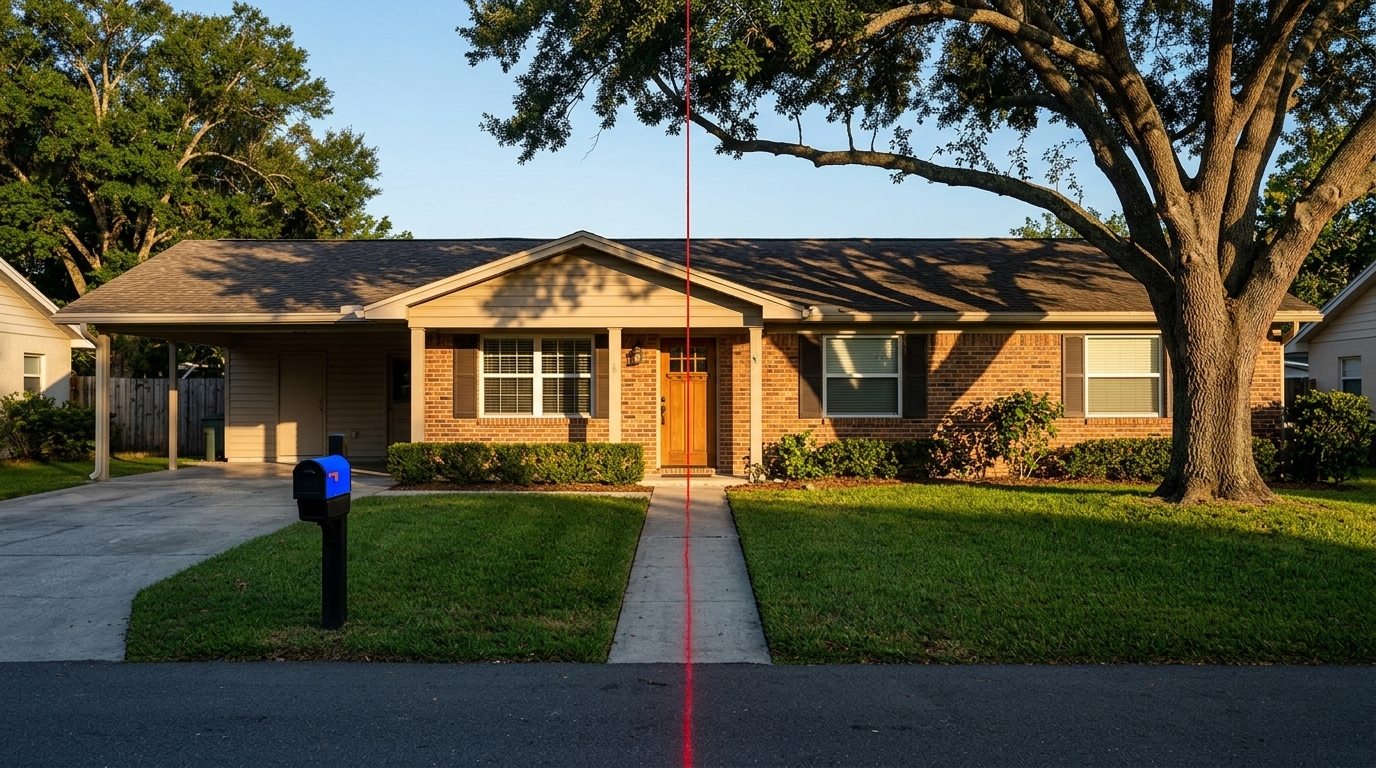
David Rodeck, writing in Kiplinger with Kathryn Pomroy, published a list of ten things everyone should know about estate planning. Number three is the one that costs the most money: have a plan, or the government decides for you.
That is true everywhere. In Florida it is unusually concrete, because the Florida Probate Code does not fill gaps with vague equity. It fills them with specific rules that produce specific outcomes, and it applies them to your family whether or not anyone in your family has read them.
Kiplinger cites Trust & Will's 2026 report finding that only 26% of Americans have a will, down from 31% a year earlier, and that 56% have no estate planning documents at all. For those readers, the Florida default plan is the whole plan. For the readers who do have documents, the more interesting question is how much of their plan the statute is still writing.
The homestead rule most Florida owners have never read
Start with the house, because it is usually the largest asset and it is the one governed by a rule that surprises people who have owned Florida property for decades.
Under Article X, Section 4(c) of the Florida Constitution and Fla. Stat. § 732.4015(1), the homestead "shall not be subject to devise if the owner is survived by spouse or minor child," and it may be devised to the owner's spouse only where there is no minor child.
Read that again slowly. It is not a rule about how much you can leave, or to whom you should leave it. It is a rule that your homestead is not devisable at all if you are survived by a spouse or a minor child, except that it may be devised to your spouse where no minor child survives. A will provision leaving the house to a child, or to a trust for the family, or to a sibling, is void as to the homestead.
There is a second route worth knowing about, because it is the one a prenuptial or postnuptial agreement uses. Under Fla. Stat. § 732.702, a surviving spouse's rights to "an elective share, intestate share, pretermitted share, homestead, exempt property, family allowance" and more "may be waived, wholly or partly, before or after marriage, by a written contract, agreement, or waiver, signed by the waiving party in the presence of two subscribing witnesses." A waiver executed after marriage requires fair disclosure of each spouse's estate under § 732.702(2); one executed before marriage does not. A minor child cannot waive anything, so where a minor child survives, that route does not open.
The natural next move is the one thousands of Florida owners have already made, which is to put the house into a revocable trust. That solves probate avoidance. It does nothing about the devise restriction. Section 732.4015(2) defines "owner" to include the grantor of a trust described in § 733.707(3), and defines "devise" to include a disposition by trust of the portion of the trust estate that would be the grantor's homestead if it were titled in the grantor's name. The restriction follows the property in.
What the statute does instead
When the devise fails, Fla. Stat. § 732.401(1) supplies the answer. If the decedent is survived by a spouse and one or more descendants, the surviving spouse takes a life estate in the homestead, with a vested remainder to the descendants living at the decedent's death, per stirpes.
Picture the practical result. A surviving spouse holds a life estate, which means she can live there and cannot sell. The children hold a vested remainder, which means they own something they cannot occupy, cannot rent, and cannot easily borrow against. Both sides are now carrying an asset whose value depends on the other side's cooperation, and both sides are grieving.
Section 732.401(2) gives the spouse a way out. She may elect an undivided one-half interest as tenant in common instead of the life estate, with the other half vesting in the descendants per stirpes. The mechanics matter more than the option:
- Under § 732.401(2)(b), the election must be made within 6 months after the decedent's death and during the surviving spouse's lifetime. That period "may not be extended except as provided in paragraph (c)," which allows at least 30 additional days where an attorney in fact or a guardian of the property files a timely petition.
- Under § 732.401(2)(d), once made, the election is irrevocable.
- Under § 732.401(2)(e), the election is made by recording a notice of election containing the legal description in the official records of the county where the homestead sits.
A surviving spouse who learns about this in month seven has already chosen the life estate by default. That is a real outcome in a real Florida probate, and it is decided by a calendar rather than by anyone's intent.
One useful limit: under § 732.401(5), the section does not apply to property the decedent owned in tenancy by the entireties or in joint tenancy with rights of survivorship.
Blended families and the arithmetic of intestacy
Florida's intestate shares are where a second marriage becomes an estate planning problem.
Fla. Stat. § 732.102(3) gives the surviving spouse one-half of the intestate estate where the decedent leaves one or more descendants who are not lineal descendants of the surviving spouse. Subsection (4) gives the same one-half where all of the decedent's descendants are also the spouse's, but the spouse has descendants who are not the decedent's.
Either fact pattern halves the spouse's share. A couple who each brought children into the marriage may reasonably assume the survivor is provided for, and the statute has already decided the survivor gets half while children who may be minors take the rest.
Disinheriting a spouse in Florida is likewise mostly theoretical. Fla. Stat. § 732.2065 reads, in full, that "the elective share is an amount equal to 30 percent of the elective estate." The elective estate is a statutory construct that reaches well past the probate estate, so a plan that moves assets outside probate has not necessarily moved them outside the elective share calculation.
The divorce rule, and the hole in it
Kiplinger's fourth point is that beneficiary designations override your will, and its example is the ex-spouse still named on a 401(k). Florida partially fixes this, and the part it does not fix is the part in the example.
Fla. Stat. § 732.507(2) voids any will provision affecting the testator's spouse upon dissolution of the marriage, and construes the will as if the spouse died at the dissolution. It carries three carve-outs in (2)(b), and it applies to decedents dying on or after June 29, 2021.
Fla. Stat. § 732.703(2) goes further, voiding a designation naming a former spouse where the designation was made before the dissolution, on the assets listed in subsection (3): life insurance and qualified annuities inside an employee benefit plan, employee benefit plans themselves, IRAs under IRC §§ 408 and 408A, payable-on-death accounts, transfer-on-death registrations, and life insurance or annuities held outside a plan. The interest passes as if the former spouse predeceased the decedent.
Then read subsection (4)(a). Subsection (2) does not apply "to the extent that controlling federal law provides otherwise." Note the phrasing. The statute lists "an employee benefit plan" among the covered assets in (3)(b), so it reaches a 401(k) on its face, and (4)(a) then withholds its operation only so far as federal law displaces it. Most employer-sponsored 401(k) plans are governed by ERISA, which is controlling federal law, so the practical answer for that asset is that you should not count on the statute. Section 732.703(4)(b) separately preserves a designation signed after the dissolution that expressly names the former spouse, (4)(g) excludes instruments governed by another state's law, (4)(h) excludes survivorship assets, and (9) limits the section to decedents dying on or after July 1, 2012.
The practical instruction is unglamorous. Florida's revocation statute is a backstop, not a substitute for changing the form. Change the form.
A Florida hypothetical
A married Orlando couple, second marriage for both, two children each from prior marriages, one of hers still 15. They own a homestead in Winter Park held in her revocable trust, which leaves the residue equally among all four children. He has a 401(k) at a former employer with his first wife still named, and an IRA with the current wife named.
If she dies first, the trust's disposition of the homestead is void as to the homestead, because she is survived by a spouse and a minor child. Section 732.401(1) then hands her husband a life estate and a vested remainder to her descendants in being at her death. Read that word carefully. Her two children take the remainder. His two children take nothing from the house, whatever the trust said about dividing the residue four ways. Her husband has six months, and only while he is living, to decide whether to elect a half interest instead.
His accounts run on a separate track. If this marriage later ends in dissolution, § 732.703 voids his IRA designation naming her, because he made it before the dissolution and an IRA sits squarely inside subsection (3)(c). His old 401(k) is the harder question, because ERISA governs it and § 732.703(4)(a) withholds the statute to the extent controlling federal law provides otherwise. Which is a long way of saying: change the form yourself.
Every one of those outcomes is fixable while both are alive. None of them is fixable afterward.
Frequently asked questions
Does putting my house in a trust get around the Florida homestead devise restriction?
No. Fla. Stat. § 732.4015(2) treats the grantor of a § 733.707(3) trust as the owner and treats a disposition by trust as a devise. The restriction follows the homestead into the trust.
Is the homestead devise restriction the same thing as the homestead tax exemption?
No, and conflating them is common. The devise restriction and the exemption from forced sale both come from Article X, Section 4 of the Florida Constitution. The homestead tax exemption is a separate creature of Fla. Stat. ch. 196 with its own filing requirements.
My divorce was finalized in Florida. Do I still need to change my beneficiary forms?
Yes. Fla. Stat. § 732.703 covers a specific list of assets and carries ten exceptions, including one for anything controlled by federal law. Treat the statute as a safety net for the form you forgot, not as a reason to leave the form alone.
I moved to Florida with documents drafted in another state. Are they still valid?
Validity and effect are different questions. A document can be validly executed and still produce a result its drafter never contemplated, because Florida's homestead devise restriction, intestate shares, and 30 percent elective share have no exact counterpart in most states. Get them reviewed against Florida law.
Take the pen back
Florida's defaults are not a safety net under your plan. They are a plan, and someone else wrote it. Working out which parts of yours the statute is currently writing takes an afternoon, and it is the cheapest hour in the entire process.
Download The Florida Default File, a 15-question diagnostic built on the authorities above, or call 866.725.2818 to schedule a 30-minute review.
Free 15-Question Diagnostic
Download The Florida Default File
Use The Florida Default File to identify where Florida's homestead, inheritance, beneficiary, and surviving-spouse rules may be making decisions your estate plan does not address.
Download The Florida Default FileComplimentary Discovery Call
Not Sure Where to Get Started?
Book a complimentary Discovery Call with our Legal Solutions Coordinators to discuss your estate planning needs, learn about our services, and determine the right next step for your situation.
Book a Complimentary Discovery CallEducational purposes only. This article is not legal or tax advice and does not create an attorney-client relationship. Joseph E. Seagle is licensed in Florida only, and every authority cited here is Florida law. Homestead devise restrictions, intestate shares, elective share regimes, and revocation-on-divorce statutes are state law and differ materially across state lines, so nothing here describes the treatment of property owned outside Florida. Federal law governs ERISA-covered plans and can displace the Florida rules described above. Aspire Legal Solutions PLLC, 1901 W. Colonial Drive, Orlando, FL 32804.
- Kiplinger, David Rodeck with Kathryn Pomroy, "10 Things You Should Know About Estate Planning," updated April 8, 2026
- Fla. Const. art. X, § 4
- Fla. Stat. § 732.4015
- Fla. Stat. § 732.702
- Fla. Stat. § 732.401
- Fla. Stat. § 732.102
- Fla. Stat. § 732.2065
- Fla. Stat. § 732.507
- Fla. Stat. § 732.703