
Asset Protection & Estate Planning
When Your Adult Child Moves Home: A Florida Asset Protection Checklist
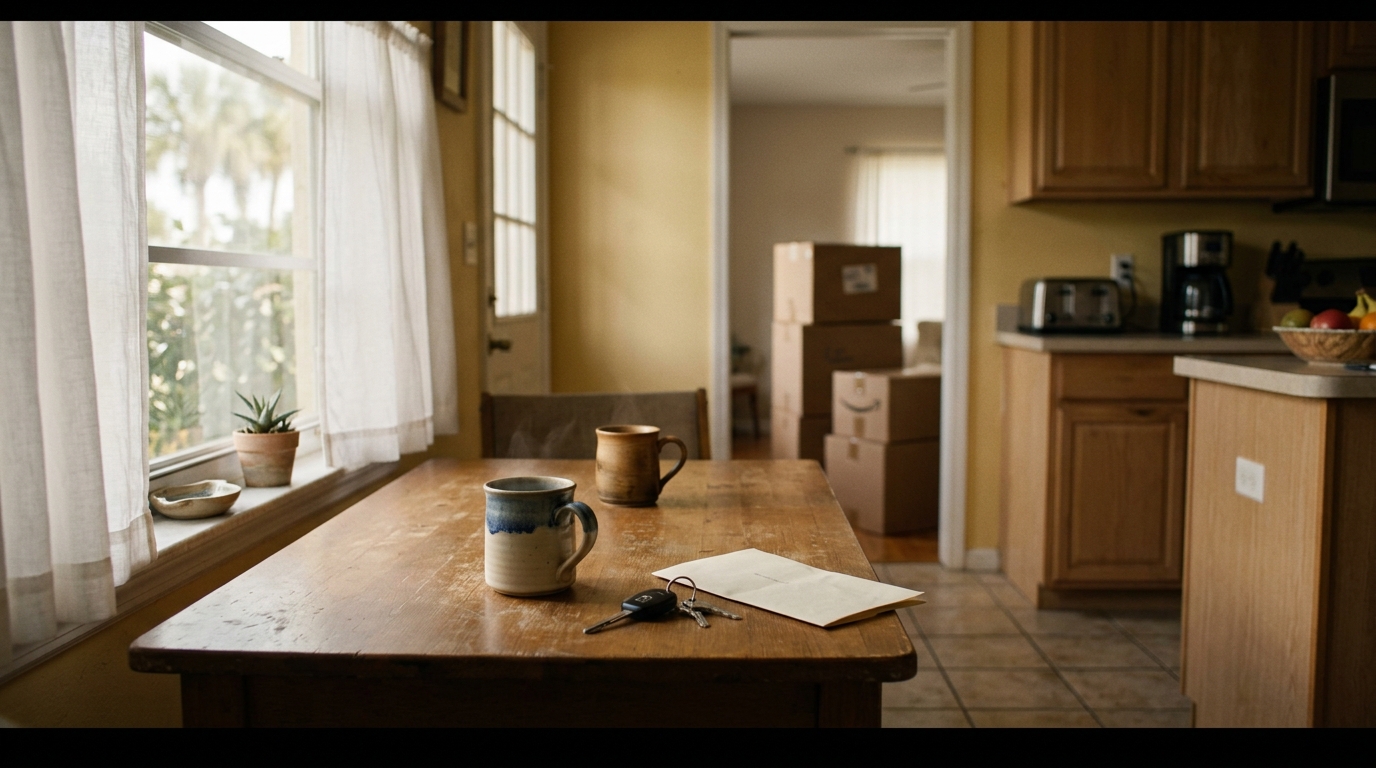
Multigenerational households are back near their pandemic-era peak. Bloomberg reports that half of parents supporting an adult child say the arrangement is affecting their finances, and one in five say they'll cut retirement savings if it comes to that. Financial planners quoted in that piece put the cost of a grown child moving back in at roughly $1,500 a month.
The planning advice that follows is usually sound: charge modest rent that rises over time, set a timeline, define non-financial contributions, stress-test the plan assuming three to five years rather than three to five months. All of it is worth doing.
None of it addresses the part that actually costs Florida families real money, which is what happens to title and to documentation while everyone is focused on the monthly budget.
The distinction most families miss
Helping your child is a cash-flow decision. Restructuring your ownership is a legal one. They feel like the same act of generosity in the moment. They are not remotely the same in consequence. Cash-flow decisions reverse. Deeds don't.
As a Florida asset protection attorney, I see the second category arrive two or three years late, usually attached to a creditor claim, a divorce, or a probate fight nobody expected.
Mistake one: adding your child to the deed
This one is nearly universal, and it's almost always well-intentioned. The parent thinks: she's living here anyway, and it'll make things simpler when I'm gone.
What it actually does is hand your child's creditors, ex-spouse, and potential bankruptcy trustee a recorded interest in your home. A judgment against her attaches to her interest in your house. A divorce puts your house on the list of marital assets to be characterized. And because co-owners have a statutory right to force a sale, you've created partition exposure in your own homestead.
The homestead protection in Article X, Section 4 of the Florida Constitution is powerful. It protects your homestead from your creditors without a dollar cap. It was never designed to shelter someone else's liabilities because you signed a deed.
The quiet tax trap inside the same deed
Here's the part almost nobody knows, and it's specific enough that it's worth reading twice.
Under Fla. Stat. § 193.155(3)(a)1.c., if you record an instrument naming yourself as both grantor and grantee and add one or more other individuals as grantee, that is not a change of ownership. Your Save Our Homes assessment cap survives intact.
But the same subparagraph continues: "However, if any individual who is additionally named as a grantee applies for a homestead exemption on the property, the application is considered a change of ownership."
Read that again. Your child, added to the deed, walks into the property appraiser's office and files for her own homestead exemption because someone told her she should. That application resets your assessed value to just value as of the following January 1. Twenty years of accumulated Florida homestead exemption benefit, gone, because of a form filed with good intentions.
Mistake two: the car
Florida is one of the few states that applies the dangerous instrumentality doctrine to motor vehicles. The owner of a vehicle is vicariously liable for the negligence of anyone operating it with the owner's consent. That rule dates to Southern Cotton Oil Co. v. Anderson, 80 Fla. 441, 86 So. 629 (1920), and it has been Florida law ever since.
Practically: if your name is on the title and your adult child causes a serious accident, the plaintiff's attorney isn't looking at your child's assets. He's looking at yours. For a Florida business attorney's clients in particular, that means the operating company, the rental portfolio, and the brokerage account all sit downstream of a car you let your kid borrow.
The fix is boring and cheap. Title the vehicle in the driver's name. Verify that the insurance actually lists the driver. Raise the umbrella limit.
Mistake three: money with no paper
Parents transfer money to an adult child constantly during these arrangements, and almost none of it gets written down. When the estate settles, the other siblings notice.
Fla. Stat. § 733.806 is unambiguous about what happens next. If a person dies intestate, property given during life to an heir is treated as an advancement against that heir's share only if it was declared in a contemporaneous writing by the decedent or acknowledged in writing by the heir. No writing, no offset. The $80,000 you advanced to one child comes off nobody's share.
That statute governs intestacy. If you have a will or a revocable trust, it needs its own equalization language, because § 733.806 won't do the work for you. Ask your Florida estate planning lawyer to look at the distribution clause specifically, not just the schedule of assets.
Mistake four: raiding the protected accounts
Fla. Stat. § 222.21 exempts most qualified retirement accounts from the claims of creditors. That exemption is one of the strongest protections in Florida law, and it applies while the money sits in the account.
Withdraw $40,000 to cover a year of household support and you've done two things at once: converted protected dollars into reachable ones, and paid tax on the conversion at your marginal rate. If support has to come from somewhere, it should come from after-tax, non-exempt savings first.
A Florida hypothetical
A Winter Park couple in their early sixties owns a home they bought in 2003, assessed well below market thanks to two decades of Save Our Homes. Their daughter moves back after a divorce with two children.
They add her to the deed "so things are simpler." She files for homestead exemption on the property the following March. Their assessed value resets to just value the next January 1, and their tax bill roughly doubles. Eighteen months later her ex-husband's judgment for unpaid support attaches to her recorded interest. She's also driving their second car, still titled in the father's name.
Every one of those outcomes was avoidable, and none of it required saying no to their daughter.
Frequently Asked Questions
Can I let my adult child live in my home without putting her on the deed?
Yes. Occupancy and ownership are separate. She can live there indefinitely with no recorded interest at all, and you keep full control over the property.
What if I want her to inherit the house?
Use a revocable living trust or an enhanced life estate deed rather than adding her to title now. Both transfer at death without giving her a present interest that her creditors can reach today.
Does charging rent create problems?
Modest rent from a family member is generally fine, though rental income is reportable and charging market rent on part of a homestead can raise questions about the exempt portion. Ask before you formalize a lease.
Should the loan be a real promissory note?
If you want it treated as a debt rather than a gift, yes. A signed note with a stated rate and repayment terms is the cleanest evidence, and it satisfies the writing requirement that § 733.806 and most trust equalization clauses depend on.
Talk to us before you sign anything
If an adult child is moving home, the most valuable hour you'll spend is the one before you sign a deed or hand over a set of keys. Aspire Legal Solutions helps Florida families structure this so that generosity doesn't turn into exposure.
Call 844-842-2774 or schedule a complimentary Discovery Call.
Free download
The Move-Back-Home Audit
A short diagnostic for Florida parents taking an adult child back in. It walks the deed, the car title, the undocumented transfers, and the protected accounts, and flags which ones are already exposed.
Download the Move-Back-Home AuditFree 15-minute call
Talk with a Legal Solutions Coordinator
Fifteen minutes, no charge, no obligation. Tell a Legal Solutions Coordinator what you are about to sign, and find out whether it belongs on a deed, in a trust, or nowhere at all. Or call 844-842-2774.
Book your Discovery CallThis article is for educational purposes only and does not create an attorney-client relationship. Joseph E. Seagle is licensed to practice law in Florida only. The statutes and constitutional provisions discussed here are Florida law and do not apply in other states. Consult a licensed attorney in your jurisdiction about your specific situation.