
Asset Protection & Privacy
Stealth Wealth Isn't Privacy, and Privacy Isn't Asset Protection
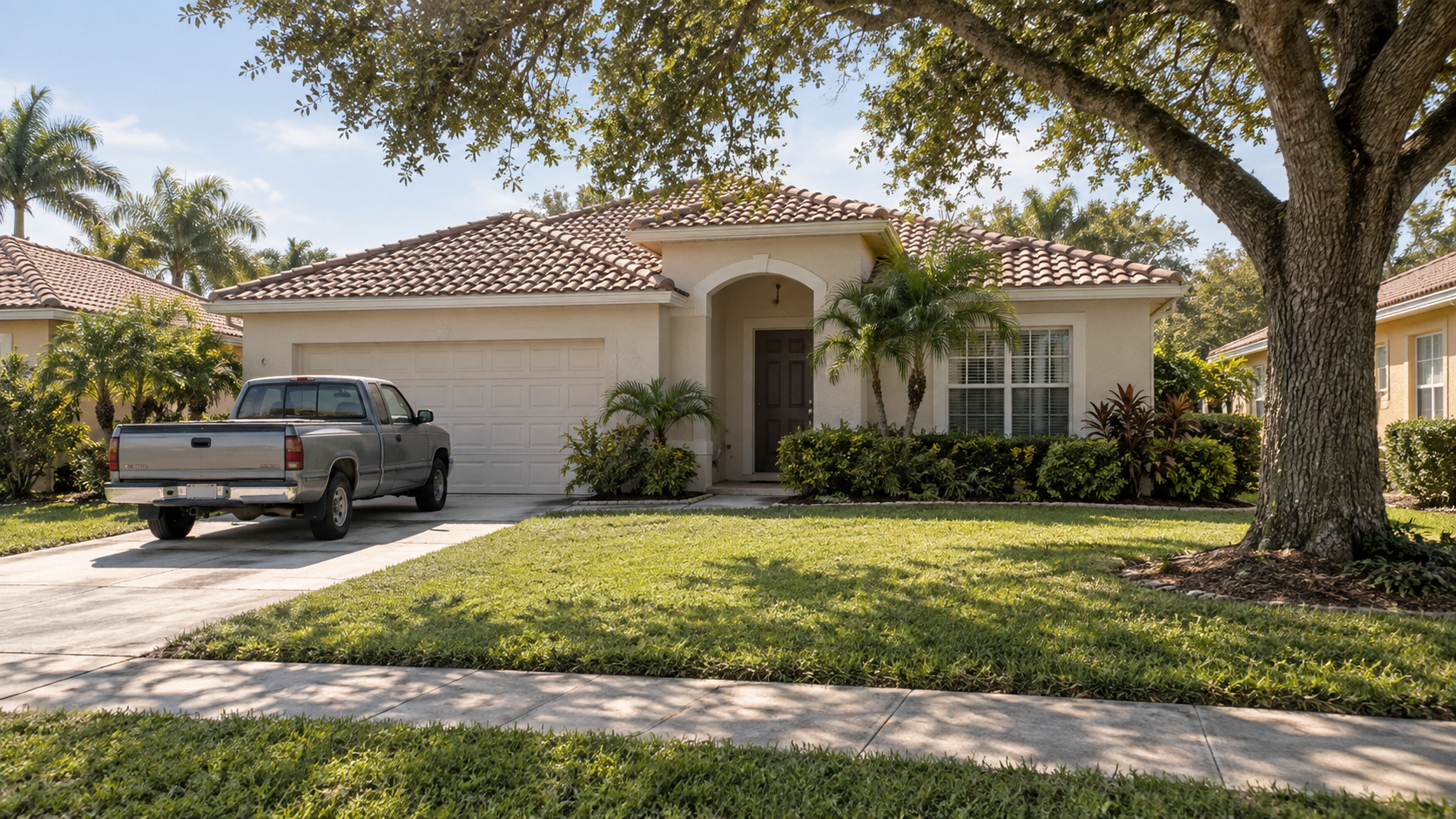
Kiplinger recently published seven signs you're practicing stealth wealth without realizing it. Keep driving the paid-off car. Bank half the raise. Don't finance the vacation. Don't post the purchase. Let net worth outrun spending.
It's a good list, and every habit on it builds wealth. The trouble starts when someone reads that list and concludes they've handled their exposure. Three different things are getting called one thing, and separating them is the whole job of a Florida asset protection attorney.
The three layers, in the order they stop working
Layer one is behavior. Stealth wealth is a spending pattern. It costs nothing, it compounds, and it keeps you off a social radar. It has no legal effect at all. No Florida statute cares what you drive, and "he didn't look wealthy" has never been raised as a defense.
Layer two is privacy. This is structural, and it's about one narrow question: what does a search of the public record return when someone types your name? In Florida that's usually two searches, and both are free. Every county clerk publishes a grantor/grantee index. The Division of Corporations publishes entity records. Privacy narrows what those searches return.
Layer three is protection. This is a set of statutes a creditor has to respect whether or not anyone can find you. Constitutional homestead. Tenancy by the entireties. Charging orders. The exemption statutes for retirement accounts and wages.
The first two layers solve for being found. Only the third solves for what happens after.
What a Florida land trust actually does
The Florida land trust is the center of most privacy conversations here, and it's the structure most often oversold.
Under the Florida Land Trust Act, Fla. Stat. § 689.071, a recorded instrument conveying property to a trustee vests both legal and equitable title in that trustee. Section 689.071(8)(e) then provides that parties dealing with the trustee "are not required to inquire into the terms of the unrecorded trust agreement." The deed shows a trustee. Your name is not in the record.
Section 689.071(8)(d) goes further and separates the two assets in both directions: an encumbrance against the trustee's title doesn't attach to a beneficiary's interest, and an encumbrance against a beneficiary doesn't attach to the trustee's title to the trust property, unless it reaches both by its own terms or by operation of other law.
Read that carefully, because the second half is where people stop reading. The statute separates two assets. It does not say the beneficial interest is unreachable.
A judgment against a beneficiary attaches to that beneficiary's beneficial interest in the land trust. The land trust moves the target. It does not remove it. Anyone who tells you a land trust puts your property beyond a personal judgment creditor is wrong, and that specific error is the most repeated one in this field.
There is one thing that genuinely protects the house, and it isn't the trust. It's homestead. Florida's constitutional exemption under Article X, Section 4 has no dollar cap and is limited by area instead: half an acre inside a municipality, 160 acres outside one. That protection survives holding title through a land trust, and § 689.071(8)(h) separately preserves the homestead tax exemption for a qualifying beneficiary. When the honest answer to "can they take my house" is no, homestead is doing the work.
The entity side, and the field that leaks
The same distinction runs through Florida LLC and asset protection questions.
Florida discloses less at formation than most owners assume. Section 605.0201(2) requires articles of organization to state only three things: the company name, the street and mailing address of the principal office, and the initial registered agent's name, Florida street address, and written acceptance. Subsection (3) makes naming managers or members permissive. Formation requires no owner disclosure whatsoever.
The annual report asks for a little more, and still not much. Section 605.0212(1)(e) requires "the name, title or capacity, and address of at least one person who has the authority to manage the company." One authorized person. Not a member list, not a cap table.
So where does the leak come from? The registered agent. It's the one field you can't leave blank, and it carries a Florida street address that goes straight into a searchable public record. Owners who use their home address as the agent address undo the entity privacy in a single line of a Sunbiz search, usually without knowing they did it.
A Florida hypothetical
An Orlando contractor owns his homestead, two rentals in Osceola County, and a service truck fleet. He drives a nine-year-old F-150, has never posted a vacation, and has $900,000 in a brokerage account he opened before he married.
He is practicing stealth wealth perfectly. His records exposure is total: both rentals are deeded in his name, and he's the registered agent for the operating LLC at his home address. And his protection is thinner than he thinks. Homestead covers the house. The rentals have none. The brokerage account, in one name, is fully exposed to a personal judgment — though after Loumpos v. Bank One (Fla. Dec. 11, 2025), retitling it jointly with his wife now works even though she wasn't on it when it opened.
Nothing about his lifestyle changes any of that. Three afternoons of paperwork changes most of it.
Frequently asked questions
Does a land trust protect my property from a lawsuit?
No. It keeps your name out of the deed record, which makes the asset harder to find. A judgment against you still reaches your beneficial interest.
Should I assign my beneficial interest to an LLC?
Sometimes, and it depends on the mortgage. On a homesteaded or mortgaged parcel, assigning out can reset the Save Our Homes cap if the property appraiser learns of it and can put a due-on-sale clause in play if the lender does. On an unencumbered non-homestead parcel it's often the standard move. This is a conversation, not a form.
Is a single-member LLC good enough?
Charging order protection under Fla. Stat. § 605.0503 is meaningfully weaker for a single-member Florida LLC. Member count is a structural decision that's awkward to fix after a claim exists.
What if I own property in another state?
Assume none of this applies. Land trust recognition, LLC disclosure, and homestead are all state law and none of them travel.
Where to start
Search your own name. Run your county's grantor/grantee index and a Sunbiz lookup on yourself and your spouse before you spend a dollar on asset protection strategies Florida owners get pitched. Most people are solving an imagined version of their record.
Then download The Florida Privacy Audit, a 15-question diagnostic that separates the three layers and tells you which one each of your assets is actually relying on. Or call 844.973.4043 for a 30-minute review.
Free download
The Florida Privacy Audit
A 15-question diagnostic that separates behavior, privacy, and protection, and tells you which layer each of your assets is relying on.
Download The Florida Privacy AuditFree 15-minute call
Talk with a Legal Solutions Coordinator
Book a complimentary 15-minute Discovery Call with Aspire Legal Solutions, or call 844.973.4043.
Book your Discovery CallEducational only, not legal or tax advice. Joseph E. Seagle is licensed in Florida only, and every authority above is Florida law. No attorney-client relationship is created by reading this.