Trust This. | By Joseph E. Seagle, Esq. | 👋 Happy Friday! Today is Love Your Lawyer Day, which is always the first Friday of November. I have no objectivity on this one, and you're under no obligation to send a fruit basket. | If you'd rather celebrate by finding out what your lawyer would ask you, this week's issue has a spare bedroom, a Miami report card, and a joint deed that may be costing your family half a step-up. | 🚨Situation Awareness: Amendment 3 passed with over 60% of the votes cast. This will amend the Florida Constitution to increase homestead and non-homestead property tax savings. If you live in Florida but you have not filed your homestead exemption paperwork with your local county property appraiser, you need to do so prior to December 31. If you fail to do so, you may — depending on how they enact the law and regulations around it — be ineligible for the homestead tax savings for years. |
|
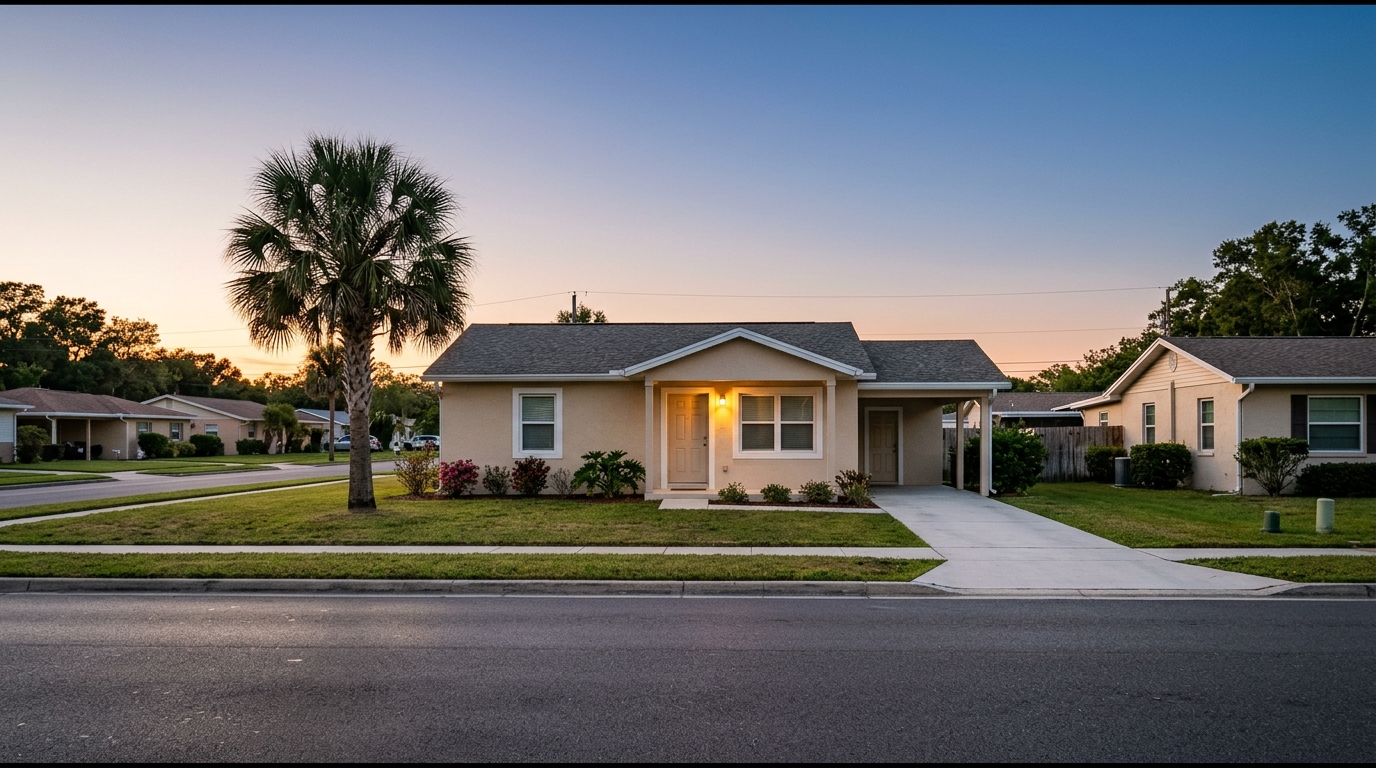
| | 1 big thing: The Supreme Court passed on roommates. Florida may be next. | | Can a city tell you who may sleep in your spare bedroom? On October 13, the U.S. Supreme Court declined to hear French v. City of Shawnee, a challenge to a Kansas suburb's ban on "co-living groups" of four or more unrelated adults. That leaves Village of Belle Terre v. Boraas, the 1974 decision letting towns limit unrelated housemates, standing. The fight over these limits is increasingly in statehouses, and Pacific Legal Foundation's state policy director told Vox he expects Florida to take up a "Golden Girls" bill in 2027. Vox published before the denial, so read its Supreme Court discussion with that date in mind. | The big picture: cities spent decades banning cheap rented rooms and boarding houses. Iowa, Oregon, Washington and Colorado have since limited how cities can restrict unrelated housemates. Pennsylvania's House passed a version this summer. Connecticut's died in its House over fears of college students in wealthy neighborhoods. Meanwhile, Zillow counts roughly 21 million empty-nest households with at least two extra bedrooms, and PadSplit, which rents furnished rooms by the week, is expanding into New York, Chicago and San Francisco. | Why it matters: room rentals are a live business model that provides additional income for empty-nesters and real estate investors, while providing more affordable housing for those who need it. Vox's lead tenant paid $180 a week in 2022, in a house of seven. Whether that's legal in Florida turns on a city's code and your deed restrictions. A bill aimed at city ordinances wouldn't automatically rewrite and HOA's declaration, however. | What most people don't know: zoning is only the first of Florida's questions. | Lodging regulation. Under Fla. Stat. § 509.013(4), a dwelling rented more than three times a year for under 30 days, or advertised as regularly rented that way, can be a transient public lodging establishment. The carve-out for four units or fewer disappears if they're advertised to transients. Weekly rooms on a platform are the fact pattern to check. However, you have to watch zoning regulations and HOA restrictions which may prohibit such transient rentals as a commercial activity in a residential area. Short notice cuts both ways. Under § 83.57, either side can end a week-to-week tenancy on at least seven days' written notice before the end of a weekly period. Your homestead tax exemption. Under § 196.061, renting "all or substantially all" of a homestead dwelling abandons it for tax purposes, subject to the statute's timing rule. Renting one room to a lodger is a different fact from moving out and renting every bedroom.
| What to execute: | For real estate investors and private lenders — underwrite room-rental income only after reading the city's definition of "family" and the recorded covenants. Rent that depends on an ordinance can vanish by ordinance. Shawnee's ordinance forced the home-sharing company HomeRoom to evict its tenants. For licensed professionals and other empty nesters — before listing a spare room, call your insurance agent and read your HOA declaration. Keep your own residence in the house. For home services businesses — when a customer asks you to add walls, bathrooms, additional fire/smoke detectors, or locks to rent rooms, confirm permits first. Your name is on the work.
| Watch for: Golden Girls or ROOM Act language filed for Florida's 2027 session, and whether it reaches private covenants or stops at local government. | The bottom line: the Supreme Court declined to step in, and Florida's answer may come from Tallahassee. If your numbers depend on it, read the code you have before betting on the one you expect. | For out-of-state subscribers: the lodging, tenancy and tax statutes above are Florida law. Occupancy rules vary by state and city, so check with counsel licensed where your property sits. |
|
| | 2. Miami got an F. Florida got a B. | | Cranes everywhere, and a failing grade anyway. The 2026 Realtor.com Metro Report Cards gave Miami 29 points out of 100, one of 13 major metros to earn an F, and the only failing metro in a state with a passing grade (Realtor.com, September 29, 2026). Florida as a whole earned a B. | The big picture: the split is about land. Jacksonville and Palm Bay scored above 70 and earned A-minus grades on the strength of homebuilding. Lakeland, Cape Coral, North Port and Orlando landed in the B range. Realtor.com senior economist Joel Berner credits suburban expansion on low-cost land, which Miami can't copy with the Everglades on one side and the Atlantic on the other. | By the numbers: Two numbers explain Miami's grade. | 248%: how much more the typical new build costs than the median resale, the highest premium among the 100 largest metros. Nearly 47%: the share of the $74,274 median income it takes to carry the $507,237 median home.
| Analytics Miami founder Ana Bozovic draws the distinction every developer should keep in mind: housing supply and affordable housing supply are different things. Miami can add thousands of units and still fail the second test. | Yes, but: a report card rewards building and affordability. It doesn't grade your project. High marks for new supply in Palm Bay also mean new competition for whoever is selling or renting there. And Berner's Miami cost list, coastal insurance, and post-Surfside condo reserve scrutiny have Florida relatives well beyond Miami-Dade. | How to use it without getting burned: | For real estate investors and private lenders — treat the other Florida grades as a lead, not a thesis. Check new-home inventory in the submarket before underwriting rent growth or exit price. For home services businesses — work follows permits. Orlando, Lakeland, Jacksonville and Palm Bay are where the report card says homes are going up. For licensed professionals buying in South Florida — run insurance and any condo assessments before you run the mortgage.
| What's Next: Berner points to the Live Local Act and its statutory zoning preemption, which can allow taller, denser residential buildings in commercial, industrial, and mixed-use areas if at least 40% of the units are rentals kept affordable for 30 years. He also wants more multifamily rezoning and accessory dwelling units. Daniel Ickowicz of Elite International Realty adds permitting speed. As he put it, "For a developer, time is money." | The bottom line: Bozovic's line is the whole story: "Miami cannot manufacture more land." The rest of Florida still has room. |
|
| | | This week’s Trust This podcast is an encore presentation of one of our most viewed episodes, where I talk about “souring the milk” when it comes to asset protection. | Listen in or watch on your favorite streaming platform. |
|
| | 3. Practice Pointers: Florida has no estate tax. Your heirs still pay. | | Kiplinger's estate tax checklist by planner Logan Queck runs through six ways to keep assets in the family. It's a sound list, but a Florida family should read it differently, because many Florida families aren't facing the tax it's named for. | The big picture: Florida imposes no estate or inheritance tax, and Art. VII, § 5 of the Florida Constitution limits the state's room to create one. The federal exemption is $15 million per person in 2026. For many of our readers, the real tax question is about income tax, which is a basis question and a retirement-account question. | Why it matters: | Retirement accounts get no step-up. Most non-spouse beneficiaries must empty an inherited traditional IRA within 10 years, at ordinary income rates. Gifts carry your basis. Inherited assets generally reset to date-of-death value under IRC § 1014. Give away a rental with a low basis and your child takes on your gain along with the house. The survivor's bracket moves. Once a surviving spouse moves from joint to single filing, the same income can meet a higher tax rate, a practical problem Kiplinger calls the widow's penalty.
| What most people don't know: the deed many Florida couples love can cost them half a step-up. Tenancy by the entirety is one of Florida's best creditor shields, but under IRC § 2040(b) only half its value lands in the first spouse's estate, so generally only half resets. | Florida's Community Property Trust Act, Fla. Stat. §§ 736.1501–.1512, is aimed at the other half. Section 736.1511 treats the trust as established under community property laws for purposes of IRC § 1014(b)(6), the full step-up provision. But there are two catches to think about before putting the property into such a trust: | The IRS hasn't blessed it. One Florida practitioner memo puts it plainly: no express IRS or case-law approval exists. You trade away protection. Under § 736.1506, one spouse's debt can be collected from that spouse's half, subject to the homestead provisions of the Florida Constitution. An entireties asset generally can't be reached by a creditor of only one spouse.
| That's the real decision: protection while you're alive against tax savings after you're gone. And this illuminates the tug-of-war between asset protection and tax planning. They don’t always go hand-in-hand, and it takes a customized approach to determine which one is best for any particular fact pattern. | Key takeaways: | Roth conversions — you pick the year and pay the tax. Heirs generally still have 10 years, but qualified withdrawals are income-tax-free. Qualified charitable distributions — from age 70½, up to $111,000 in 2026 can go directly from an IRA to a qualified charity (not a private foundation or donor-advised fund) and stay out of taxable income. Appreciated assets — often better held until death than gifted. The § 1014(e) one-year rule stops the deathbed round trip. Annual gifts — $19,000 per recipient in 2026 still moves cash cleanly. Valuation discounts — they shrink the basis reset along with the estate, so under $15 million they can cost more than they save.
| The bottom line: plan for the tax your family will actually pay, and don't give up a creditor shield to get there without pricing both sides. | For out-of-state subscribers and property owners: this is Florida law plus general federal tax information, not tax advice. Some states tax estates and inheritances at far lower thresholds, and real estate you own there can bring those rules with it. Consult counsel and a tax adviser where you live or own property. | Go deeper: Read the full long-form article on aspirelegal.com or download our Florida Inheritance Tax Audit worksheet. |
|
| | 4. Coaching Thoughts: Is your culture too nice to hit its Rocks? |  | Sometimes Edward is just too nice to Hudson, like when he just sits there, watching TV, while Hudson sleeps across his leg. |
| Every small business owner says they want candor. Then the review comes around and everyone "meets expectations." In Harvard Business Review, Ron Ashkenas and Gali Cooks describe a company where virtually every employee met or exceeded expectations while it fell behind competitors. Their diagnosis is that niceness is a culture, built into your meetings and reviews, and it won't be fixed by one leader having one hard conversation. | Find the meeting that's pretending | The authors name the fait accompli meeting: a polished update where the outcome was settled in advance and asking a real question would embarrass someone. If your Level 10 meeting runs on reports and nobody ever drops an issue on the list, you've got one. The cure is an agenda built around open questions that change what you do next. EOS already gives you the tool via “IDS”: identify, discuss, solve. | Let the data do the disagreeing | At Herman Miller, the Aeron chair could be configured 140 million ways. A new VP showed that only 4,000 were ordered with any frequency and just 400 made up most of sales. Marketing cut its customization areas in half, and margins rose gradually with no drop in sales volume. She didn't win on force of personality. She brought a number. | Put the uncomfortable number on your Scorecard, where it gets reviewed weekly. Run a small pilot before you ask anyone to change how the company works. Give a missed Rock a real conversation, not a polite "off track" and a move to the next item.
| The owner goes first | On one executive team Ashkenas worked with, each leader received confidential peer feedback and discussed it with the group, CEO first. She said she avoided conflict and wasn't always clear about expectations. A 90-minute session ran three hours, and several executives took the approach back to their own teams. Your team won't get more honest than you're willing to be about yourself. | Bottom Line: being kind to people and being vague with them are different things, and vague is the one that costs them. | This Week's Challenge: at your next L10, name one thing you avoid that's hurting the team, then ask for one piece of feedback. Don't defend it. Write it down, and make the fix a Rock if it's big enough. |
|
| | We hope you found this helpful — any feedback is appreciated and can be shared by hitting reply or using the feedback feature below. | Was this email forwarded to you? Subscribe here. Have an idea or issue to share? Email us. Connect with us using your preferred social media and website links for MyLandTrustee and Aspire Legal Solutions. My Land Trustee mailing address: PO Box 547945, Orlando, FL 32854-7945 Aspire Legal Solution mailing address: PO Box 547934, Orlando, FL 32854-7934 Our physical address: 1901 West Colonial Drive, First Floor, Orlando, FL 32804 Our phone number: (844) 842-2774
| Be on the lookout for our next issue! 👋 |
|
|
|