Florida Homestead Protection vs. Homestead Tax Exemption: What Most Homeowners Get Wrong
If you own a home in Florida, there’s a good chance you’ve heard some version of this:
“Make sure you file your homestead exemption so your house is protected.”
That statement sounds right—but it’s legally incomplete.
As Florida asset protection attorneys, we regularly see confusion between homestead tax exemptions and homestead creditor protection. They sound similar, but they operate under entirely different legal frameworks.
Understanding the distinction can mean the difference between confidence and unnecessary risk.
The Two Types of “Homestead” in Florida
Let’s separate them clearly.
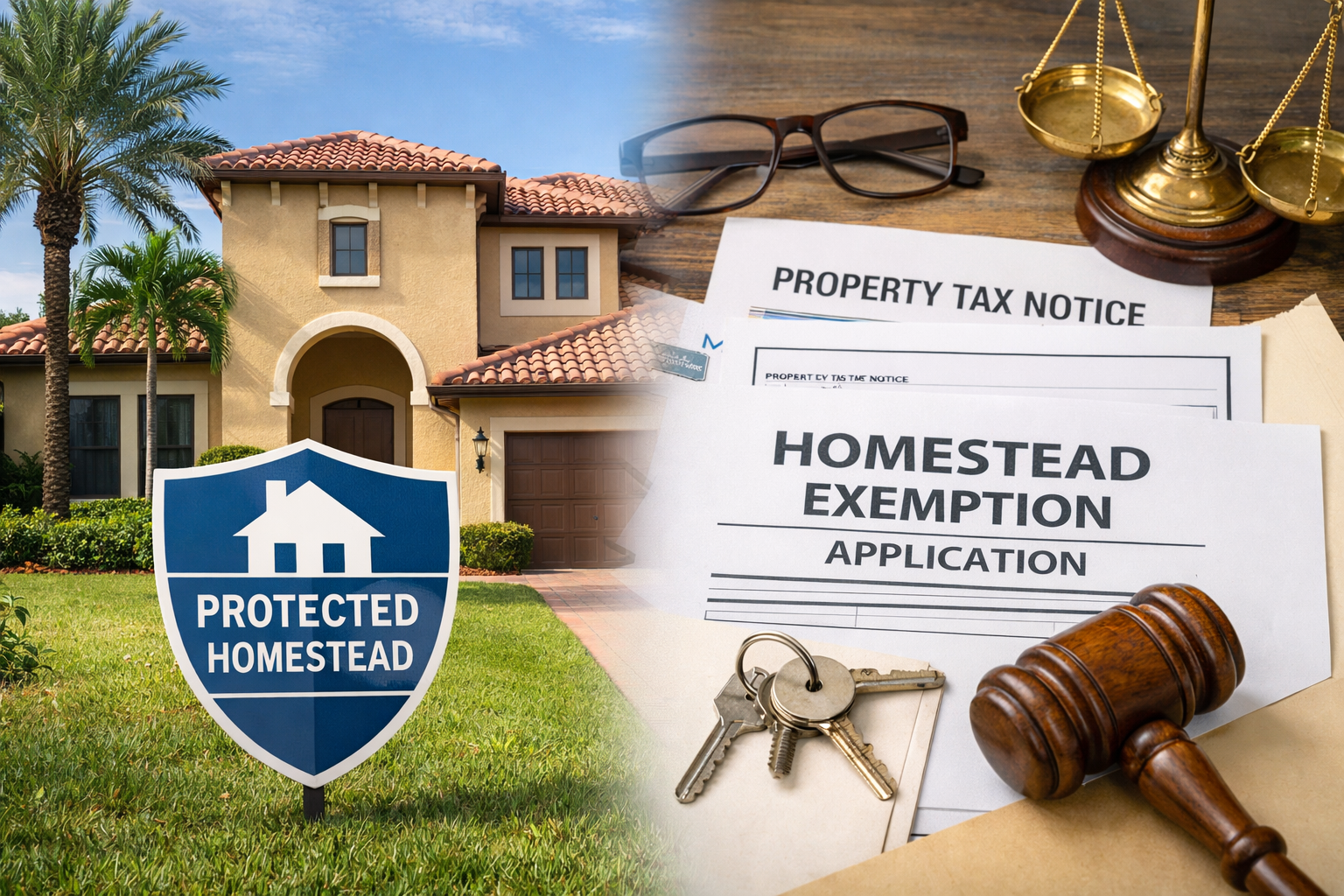
1. Homestead Tax Exemption (Property Tax Benefit)
This is what most people are familiar with.
- Filed with your county property appraiser
- Reduces the taxable value of your home
- Can save you thousands annually in property taxes
- Requires an application
This is an administrative benefit, not a legal shield.
2. Homestead Protection (Creditor Protection)
This is where things get powerful.
Florida’s Constitution provides unlimited protection (subject to acreage limits) for your primary residence against most creditors.
This protection:
- Is automatic
- Does not require filing
- Is rooted in Article X, Section 4 of the Florida Constitution
- Applies regardless of whether you claimed the tax exemption
This is one of the strongest asset protection strategies Florida offers.
Why the Confusion Exists
The confusion comes from overlap.
When you file for the homestead tax exemption, you are essentially telling the county:
“This is my primary residence.”
That same fact—primary residence—is also central to homestead protection.
So people assume:
“No filing = no protection.”
But legally, that’s not how it works.
What Actually Determines Homestead Protection
Courts look at facts and intent, not paperwork.
To qualify, you generally must:
- Occupy the property as your primary residence
- Have the intent to remain there permanently
- Be a natural person (not an LLC or corporation)
Evidence might include:
- Driver’s license address
- Voter registration
- Utility bills
- Where you spend most of your time
Notice what’s missing: a required filing.
Is Filing the Homestead Exemption Still Important?
Yes—but for a different reason.
While it is not required for protection, filing the exemption:
- Strengthens your evidentiary position
- Creates a public record of your residency
- Helps avoid disputes in bankruptcy or creditor litigation
Think of it as supporting documentation, not the source of the protection itself.
Real-World Scenario
A client comes in worried:
“I didn’t file my homestead exemption last year. Am I exposed?”
In most cases, the answer is no—assuming they were actually living in the home as their primary residence.
But if a creditor challenges the claim, the lack of a filed exemption could create friction in proving intent.
That’s where proactive planning matters.
Key Exceptions to Homestead Protection
Even Florida’s strong homestead laws have limits.
Your home is not protected from:
- Property taxes
- Mortgages
- Mechanics’ liens (contractors)
- Certain governmental obligations
Also, improper structuring—such as titling your residence in an LLC—can destroy homestead protection entirely.
This is where working with a Florida real estate lawyer or Florida asset protection attorney becomes critical.
Strategic Takeaways
If you’re serious about asset protection strategies in Florida, here’s the practical guidance:
- Live in the property as your primary residence
- File your homestead tax exemption anyway
- Avoid titling your residence in an entity
- Align your estate plan with homestead rules
And importantly:
Don’t assume lack of paperwork equals lack of protection.
Frequently Asked Questions
Does owning the home in an LLC affect homestead?
Yes. It generally eliminates homestead protection.
Can I have more than one homestead?
No. You get one primary residence.
Does homestead protection apply in bankruptcy?
Yes, with federal overlay rules—but Florida’s protections are often preserved.
Bottom Line
Florida homestead protection is automatic. It exists because of how you live—not what you file.
The tax exemption is valuable, but it’s not the gatekeeper.
If your Florida home is your primary residence, you likely already have one of the most powerful asset protection tools available—whether you realized it or not.
Protect Your Home the Right Way
Download our Florida Homestead Protection Playbook to better understand how to properly structure, protect, and document your primary residence.
Download the Playbook